Get Expert On-Page SEO Services With Any CMS
Your business must have optimized, search engine-friendly content. Your website should rank for the keywords your customers are searching for. In order to drive organic traffic to your most important web pages, we’ll develop a results-driven on-page SEO strategy for your site.
Why Is On-Page SEO Important?
Continuing to improve Google’s user experience is in Google’s best interests. As a result, the factors that determine the order of pages are becoming increasingly complex. As a result, the content of your page should match the search query as closely as possible. Search engines will be able to understand what your pages are about accurately when they see them.
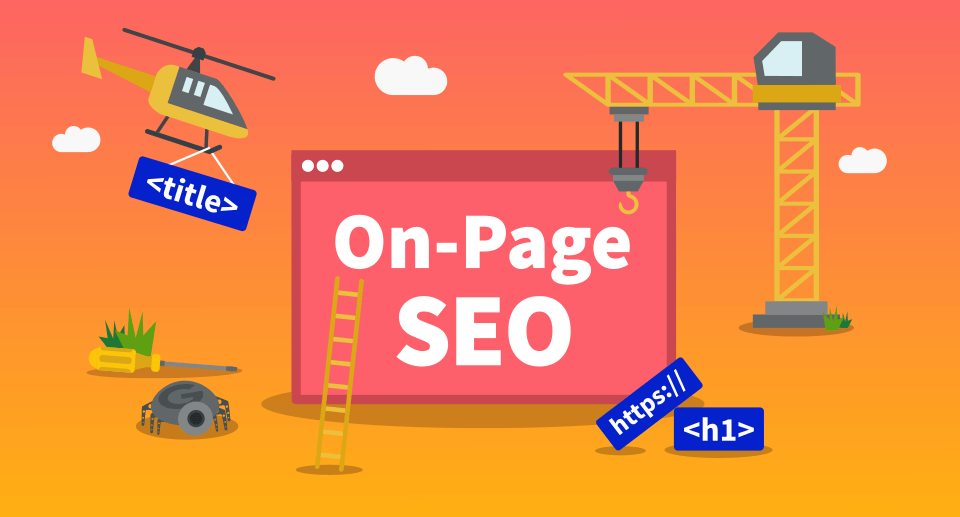
Our On-Page SEO Services
As a full-service on-page SEO agency, we won’t just check off a checklist. We will take a comprehensive approach to achieve the best results for your business.
Our on-page SEO experts will begin by auditing your web pages. Following the audit, we will formulate a strategy that aligns with your digital growth goals. Following the strategy implementation, we will take massive action. We will provide weekly reports throughout your campaign, and we will keep you updated every 48 hours.
Some Of The Things We'll Do To Optimize Your Pages
We will optimize each of your individual pages’ on-page factors. This includes, but is not limited to:
- Content – we will evaluate how it displays on mobile and tablet devices, its relevance, its uniqueness, UX, keywords, authorship, shareability, etc.
- Title tags – Our team will ensure that your title tags provide search engines with important information.
- URLs – We will examine your URL structure to make sure search engines understand its relevance. Additionally, we will look at your internal linking.
- Alt text – All your images will be checked for alt text
- Meta descriptions – People often forget to add meta descriptions to their web pages.
How to do on-page SEO?
On-page SEO involves following an on-page SEO checklist
- Get a website audit
- URLs, page titles, and meta descriptions should be updated
- Where necessary, include keywords in URLs
- Focus your content on your keywords
- Install analytics and track your progress
- Do not stuff your content with keywords or hide embedded URLs
You can also hire an on-page SEO agency to make sure your project succeeds
How to improve on-page SEO?
You should conduct an onpage SEO audit to improve your on-page SEO. This will help you determine which keywords you rank for and which ones you may want to include in your content. Additionally, you will want to be sure your URLs won’t have to be changed, and if so, that the keywords are included.
Why is on page SEO important?
The importance of on-page SEO is that your content needs to be suitable for both site visitors and bots. By focusing on page SEO, you will create content that adds value to your site and describes what you do and who you are. The work of securing on page SEO services from an expert can be overwhelming, so outsourcing your project can be a great option. Let’s discuss your needs today.
On-Page SEO FAQs
Search engines like Google use search engine spiders to rebuild or index websites, and these spiders pay particular attention to content within H1 header tags.
In order to structure content for SEO and UX, header tags continue to play a crucial role. The use of heading tags is essential to the usability and the search engine optimization of your website. For search engines, keywords are derived primarily from content, heading tags, and titles of web pages. It is important that heading tags are readable. A search engine should be able to understand the header on your page if your visitors do.
In terms of on-page search engine optimization, this isn’t going to make or break you. But Brian Dean’s tests have shown that wrapping your target keyword in an H2 tag can have some effect.
Therefore, you should include your target keyword at least once in a subheading…and wrap it in an H2 tag.
Google has stated that its algorithm gives more weight to the first 3-5 words in a URL. Recent research from Brian Dean found that short URLs may give you an edge in the search results.
Make your URLs short and sweet if you want them to rank well in the search engines. Make sure your URLs contain your target keyword.
On-page SEO factors such as your title tag are important. As a general rule, the closer the keyword is to the beginning of the title tag, the more weight it has with search engines. In the words of the infamous Brian Dean:
“You don’t always need to start your title tag with your target keyword. But if there’s a keyword that you’re gunning for, try to put it towards the beginning of your title.”
There you have it!
Absolutely! You can rank for long-tail versions of your target keyword by using modifiers like “2021”, “best”, “guide”, “checklist”, “fast” and “review”.